MES and production planning for manufacturers
Production planning, reporting at the machine and tracking of OEE, stoppages and scrap, connected to the ERP you already have. A tool for the shop floor.
What usually gets in the way
Planning that lives in a spreadsheet
One person knows what the week looks like. When an order changes or a machine stops, everything has to be redone by hand.
Stoppages nobody writes down
Short stops and long changeovers never show up in any statistics, so nobody knows where the time goes.
Scrap found too late
The fault shows up at final inspection or at the customer. By then you can't tell which batch, machine or shift it came from.
An ERP that stops at the office
The ERP knows what's been ordered, but not what's happening at the machine right now.
What we can build for you
Production planning
See which orders to make, in which order and on which machine, and move them when something changes.
About Business systemsReporting at the machine
Operators log starts, stops, counts and scrap on a tablet, with the reason there and then.
About App developmentOEE and key figures
Availability, performance, quality and on-time delivery, updated as it happens.
About Automation & reportsDeviations and traceability
Deviations and batches are recorded where they happen, so you can trace what went to which customer.
About Business systemsLink to your ERP
Orders and items come from the ERP, and what's reported as done goes back.
About Integrations
Systems, standards and rules
- ERP systems
- Monitor, Visma, Business Central or whatever you run. Orders and items come from there and what's reported goes back.
- Machine data
- Signals from machines and controllers over OPC UA or MQTT, when you want stops and counts recorded automatically.
- Barcodes and labels
- Batch and serial numbers on labels, scanned at every step.
- ISO 9001
- Deviations, actions and traceability are documented, so the evidence is there when the auditor arrives.
Case studies in this industry
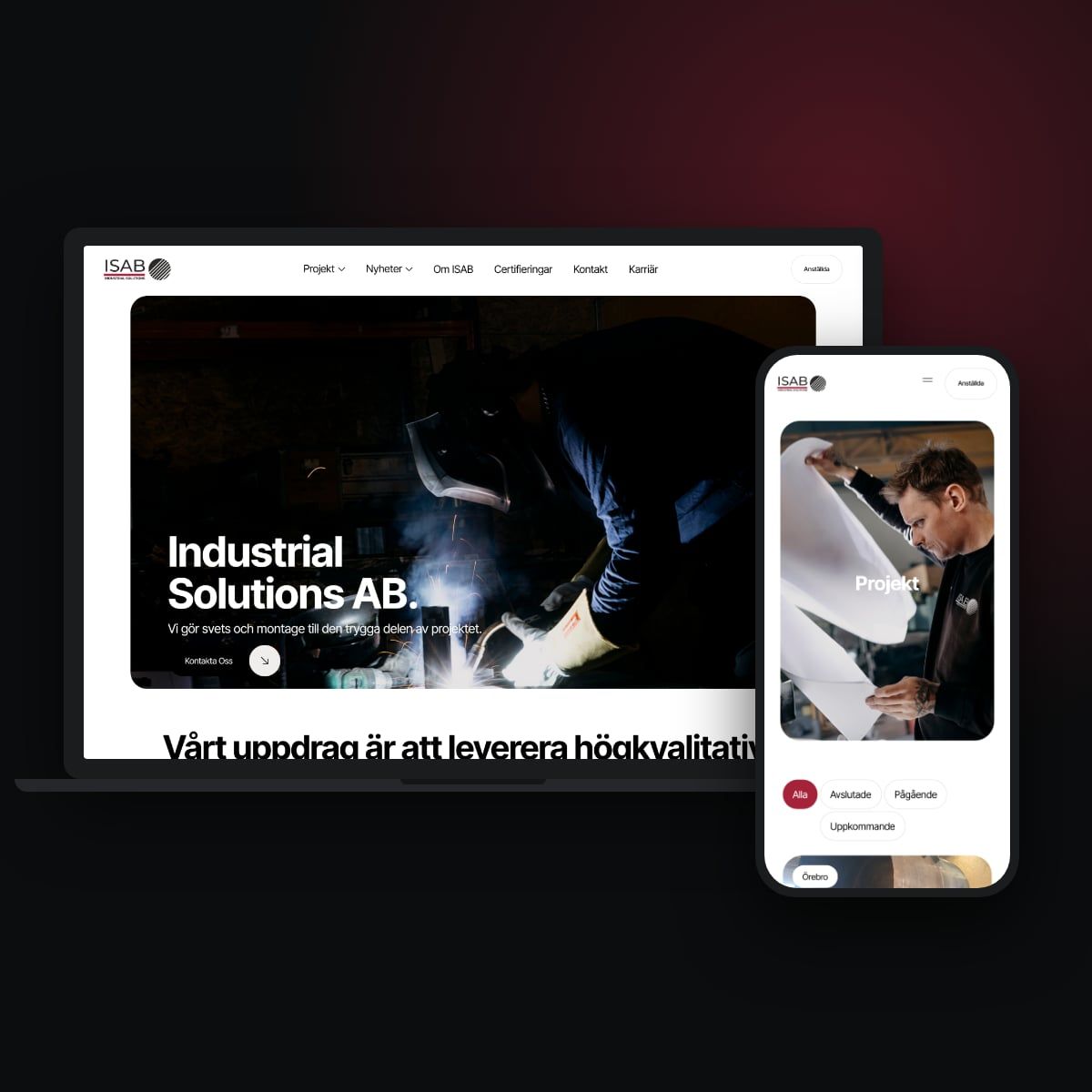
How it works
Prototype and design system
Tell us what you want to build and we'll make a clickable prototype and a design system for it. Free, so you see what you get before you decide. If a project doesn't need a prototype, we do a free audit or workshop instead.
Needs, requirements and plan
We go through how you work today and what gets in the way. It becomes a requirements document and a plan where what makes the biggest difference gets built first, and a proposal with a fixed price per stage.
Kickoff workshop
Us, you and the people who'll use it, in one room. We agree what's included and walk out with a plan and the first stage under way.
Follow-up
We build in short rounds with a demo after each. After launch we follow up against the goals and improve what matters most.
Why a micro studio?
Many manufacturers have an ERP that handles the finances well but not the shop floor. A smaller tool of your own for planning and reporting, connected to the ERP, is often the right size. That's what we build.
We are three people: Christos Potamitis, Olof Öhrn and Max Rosberg Somerlock. The people you meet in the first meeting are the same three who design, build and run it afterwards.
The same people all the way
Olof is your contact from the first meeting through the whole project, and the three of us work so closely that what you tell us reaches the people who build.
Quick decisions
Questions get quick answers and decisions get made in the meeting. You talk directly to whoever can answer, not someone who has to go and ask.
A fixed price per stage
The project is split into stages with a fixed price for each. You know what the next step costs before it starts, and you can change direction between stages.
A network for the rest
What we don't do ourselves, such as IT operations and infrastructure, is done by hand-picked partners. You still have one contact: us.
It also sets a limit, and we're honest about it. We take on a few projects at a time, and if we're not right for yours, we'll tell you on the first call.
Frequently asked questions
- A MES (manufacturing execution system) runs and tracks production on the shop floor, between the ERP and the machines. It shows what should be made, what was actually made and how long it took.
- OEE (overall equipment effectiveness) measures how effectively a machine or line is used. It's availability times performance times quality, and shows how much of the possible time turned into good products.
- No. The production tools connect to the ERP you already have.
- Yes, and it's often the best way. We start with one machine or line, make sure the reporting works day to day, and build from there.
Tell us how you work today
A first conversation costs nothing. We listen, ask questions and tell you honestly whether and how we can help.